
TL;DR:
- Managing exam stress involves establishing daily habits like adequate sleep, exercise, and scheduled worry time to build resilience. In-the-moment techniques such as diaphragmatic sighing and expressive writing quickly reduce anxiety and improve focus during exams. Effective study strategies, including active recall and practice exams, foster long-term confidence and reduce test-related fear.
Exam stress is the psychological and physical strain that builds when academic pressure exceeds a student's perceived ability to cope. You can manage exam stress effectively through controlled breathing, expressive writing, strategic sleep, and evidence-based study habits that directly improve memory, focus, and mood. Students sitting the PSLE, O Levels, A Levels, or any major Singapore examination face a high-stakes environment. The good news is that the techniques below are grounded in research and take minutes to learn.
Which daily habits actually reduce exam stress?
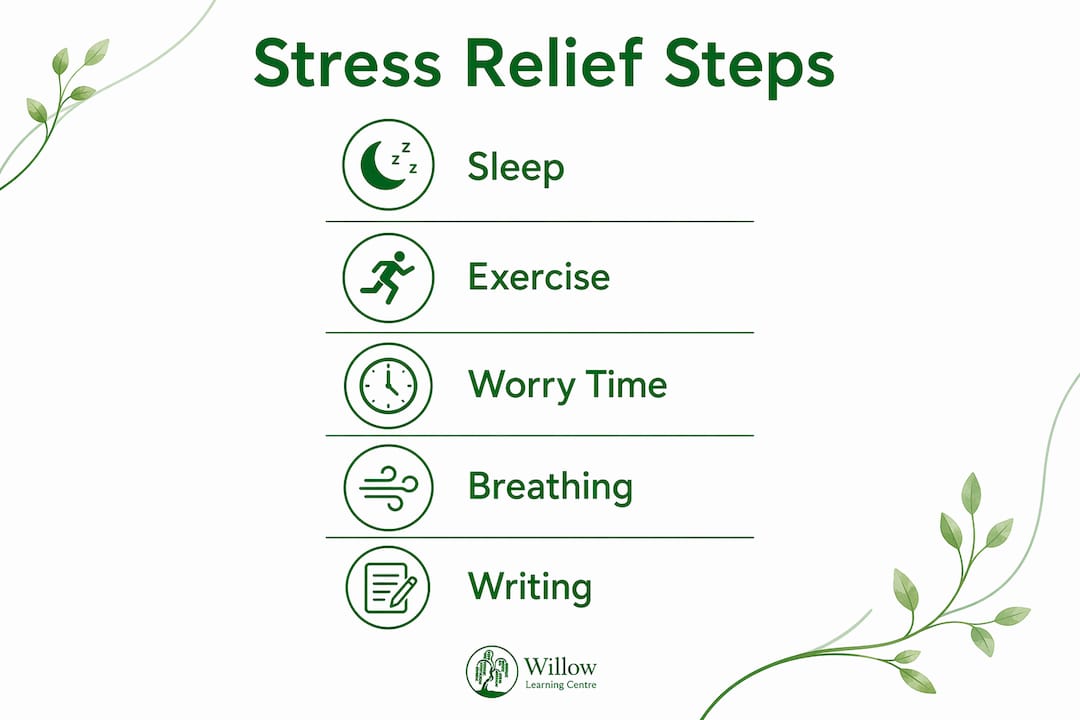
Three habits form the foundation of any solid stress management plan: sleep, exercise, and structured worry time. Each one targets a different part of the stress response, and together they build genuine resilience against test pressure.

Sleep is non-negotiable
Students need 7–9 hours of sleep nightly, especially the night before an exam, for the prefrontal cortex to function at full capacity. The prefrontal cortex governs memory retrieval and problem-solving. Without adequate sleep, you walk into the exam hall with a brain running on reduced power, regardless of how much you revised.
Exercise sharpens your mind
A 30-minute moderate aerobic session before an exam increases hippocampal blood flow and BDNF, a protein that supports memory retrieval and lowers cortisol. That means a brisk walk around Bedok Reservoir or a light jog the morning before your paper is not procrastination. It is preparation.
Schedule your worrying
Anxious thoughts do not disappear when you push them away. A daily 15–20 minute worry period helps contain rumination and improve study focus. Set a fixed time each day, write down every concern, then close the notebook. Outside that window, redirect your attention to your study task. This technique is used in cognitive behavioural therapy and transfers directly to exam preparation.
Pro Tip: Set your worry window for early evening, not just before bed. Processing anxious thoughts too close to sleep time can delay the onset of rest.
| Habit | Effect on Exam Stress |
|---|---|
| 7–9 hours sleep | Restores prefrontal cortex function for memory and reasoning |
| 30-minute aerobic exercise | Lowers cortisol and boosts memory retrieval via BDNF |
| Daily 15–20 minute worry period | Contains rumination and frees mental space for study |
How can breathing and expressive writing calm nerves fast?
When anxiety spikes before or during an exam, you need tools that work in under two minutes. The physiological sigh and expressive writing are two of the most research-supported options available.
The physiological sigh
The physiological sigh reduces acute stress more effectively than mindfulness or box breathing by activating the parasympathetic nervous system through a prolonged exhale. Here is how to do it:
- Take a deep inhale through your nose.
- At the top of that breath, take a second short inhale through your nose to fully inflate the lungs.
- Release a long, slow exhale through your mouth until your lungs are empty.
- Repeat two to three times.
The double inhale deflates air sacs in the lungs that collapse under stress, and the extended exhale triggers the calming response. You can use this technique at your desk, in the exam hall, or during a study break.
Expressive writing before the exam
Writing freely for 10 minutes immediately before an exam offloads anxiety from working memory, directly improving performance. The process works because expressive writing frees mental capacity without requiring you to solve the problem or reframe your thinking. You simply write whatever is worrying you, uncensored, and your brain treats it as processed.
- Find a quiet spot outside the exam hall.
- Write continuously for 10 minutes about your fears and concerns.
- Do not edit or re-read what you write.
- Put the paper away and walk into the exam.
Pro Tip: Practise expressive writing during mock exam sessions so the habit feels natural on the actual day. Doing it for the first time under real pressure is harder than it sounds.
What study strategies reduce exam anxiety most effectively?
Study methods that build genuine confidence are the most reliable long-term solution for coping with test pressure. Two techniques stand above the rest: active recall and practice exams under realistic conditions.
Active recall and spaced practice
Active recall means testing yourself on material rather than re-reading notes. Spaced practice means distributing that testing across days and weeks rather than cramming it into one session. Both methods are supported by decades of cognitive science research. They work because retrieval practice strengthens memory pathways, making information easier to access under pressure.
Practice exams as anxiety treatment
Practice exams under timed, realistic conditions desensitise exam anxiety by turning novelty stress into familiarity. Panic in the exam hall is often a retrieval problem, not a knowledge gap. When your brain has already experienced the format, the timing, and the pressure, the exam environment stops feeling threatening. Sit past-year papers from the Singapore Examinations and Assessment Board under full exam conditions. Time yourself. Sit at a desk, not on your bed.
Reframe mistakes as data
Reframing mistakes as data rather than failure maintains emotional stability and productivity throughout exam preparation. When you get a practice question wrong, the correct response is curiosity, not self-criticism. Ask what the question was testing and whether your study plan covers that area. This mindset shift also applies when choosing a tuition approach that fits your learning style.
Pro Tip: After each practice paper, spend 10 minutes categorising your errors. Split them into knowledge gaps, careless mistakes, and timing issues. Each category needs a different fix.
| Study Technique | Anxiety Impact | Best Use |
|---|---|---|
| Active recall | Reduces fear by building retrieval confidence | Daily short sessions |
| Spaced practice | Prevents last-minute panic through gradual mastery | Across weeks, not days |
| Timed practice exams | Desensitises exam environment stress | Weekly full-length papers |
| Reframing errors | Maintains motivation and emotional stability | After every practice session |
How should you prepare the night before and morning of an exam?
The night before an exam should be a period of deceleration, not intensification. Late-night cramming increases anxiety and fatigue, impairing performance. Memory consolidation happens during sleep, so the hours you spend awake past midnight are actively working against you.
The night before
- Do light revision only: review summary notes or flashcards for no more than 45 minutes.
- Prepare your bag, stationery, and identification the evening before to remove morning friction.
- Avoid screens for at least one hour before bed.
- Aim to be in bed by 10:30 pm for a 6:30 am start.
The morning of the exam
Follow this sequence on exam day:
- Eat a balanced breakfast with protein and complex carbohydrates. Avoid sugary drinks that cause energy crashes.
- Hydrate with water. Mild dehydration impairs concentration.
- Arrive at the venue early enough to settle without rushing.
- Avoid students who are visibly panicking. Anxiety is socially contagious and will raise your own cortisol before you sit down.
- Use the physiological sigh technique while waiting to enter the hall.
The deceleration principle applies to the morning too. Keep your routine calm and predictable. You have already done the work.
Key takeaways
Managing exam stress requires consistent daily habits, targeted in-the-moment techniques, and study strategies that build real confidence rather than surface familiarity.
| Point | Details |
|---|---|
| Sleep is the foundation | Aim for 7–9 hours nightly; the night before an exam is not the time to revise until midnight. |
| Breathe to reset fast | The physiological sigh activates the parasympathetic system and works in under 60 seconds. |
| Write before you sit | Ten minutes of expressive writing before the exam frees working memory and reduces anxiety. |
| Practise under pressure | Timed practice exams desensitise the brain to exam conditions better than re-reading notes. |
| Decelerate the night before | Light revision and early sleep consolidate memory more effectively than last-minute cramming. |
Nerves are not the enemy
I have worked with hundreds of students across Singapore, and the most common misconception I see is the belief that all exam nerves must be eliminated. They must not. Moderate arousal supports performance, while excessive anxiety impairs memory access. The goal is calibration, not elimination.
The students who struggle most are often those who interpret every anxious feeling as evidence that they are not ready. That interpretation is the problem, not the nerves themselves. A racing heart before an exam is your body preparing to perform. The techniques in this article do not switch off that response. They channel it.
What I have found consistently is that students who treat exam preparation as a learnable skill, rather than a test of innate ability, handle pressure far better. They build systems. They practise breathing. They ask better questions in class. They treat mistakes as feedback. Over time, the exam hall stops feeling like a verdict and starts feeling like a familiar environment where they know what to do.
You can reach that point too. Start with one technique from this article today.
— Fu Pincheng
How willow learning centre @ bedok supports you through exams
Knowing the right techniques is one thing. Having consistent support while you apply them is another.
Willow Learning Centre @ Bedok offers small group tuition for Primary, Secondary, and Junior College students across Singapore. Classes are built around each student's individual learning needs, which means your tutor notices when you are struggling with confidence, not just content. The pacing is flexible, the environment is supportive, and the track record speaks for itself. If you want structured preparation that reduces test pressure and builds real exam readiness, explore personalised tuition at Willow Learning Centre @ Bedok and take the next step towards your best result.
FAQ
What is the fastest way to calm nerves before an exam?
The physiological sigh is the fastest evidence-based technique available. Take a double inhale through your nose, then release a long, slow exhale through your mouth, and repeat two to three times.
How much sleep do students need before an exam?
Students need 7–9 hours of sleep the night before an exam. Sleep consolidates memory and restores the prefrontal cortex function needed for problem-solving.
Does exercise actually help with exam anxiety?
Yes. A 30-minute aerobic session increases BDNF and reduces cortisol, improving both memory retrieval and mood before an exam.
Should i study the night before my exam?
Light revision for no more than 45 minutes is acceptable. Cramming late into the night increases anxiety and fatigue and impairs performance the following day.
What is expressive writing and how does it help?
Expressive writing means writing freely about your worries for 10 minutes before an exam. It offloads anxiety from working memory, freeing mental capacity for the exam itself.