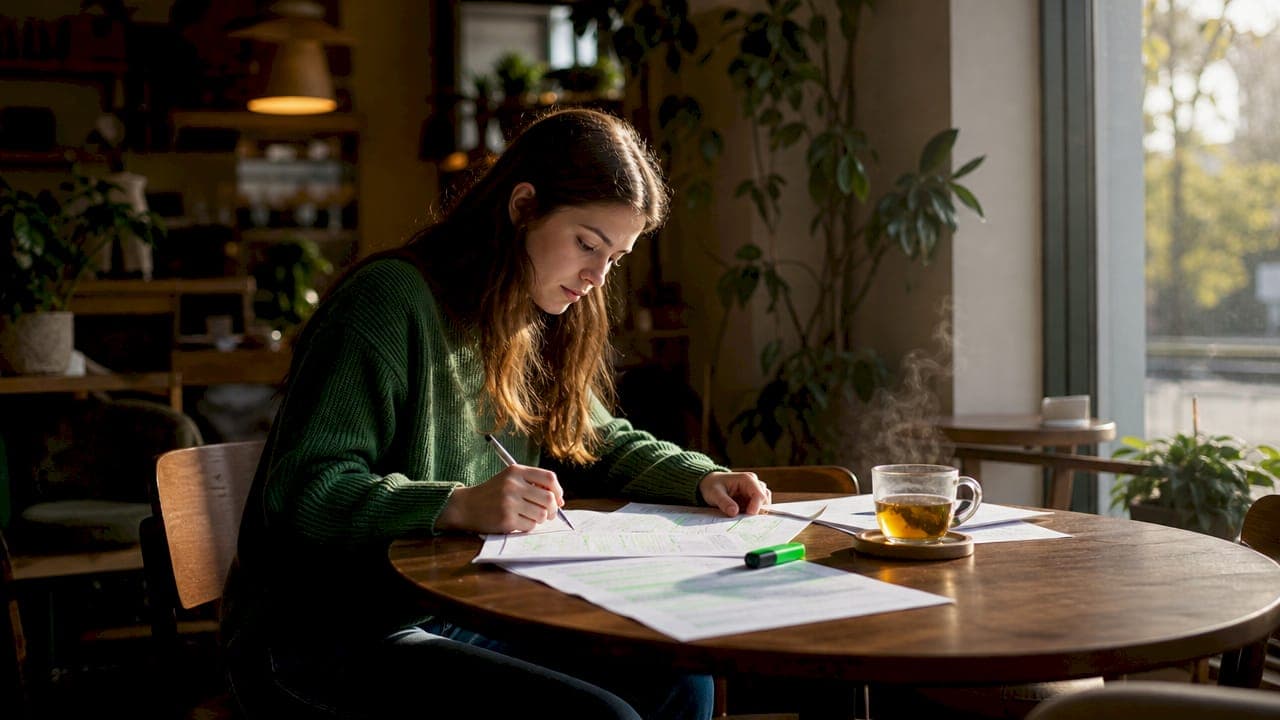
Mock exams are defined as full-length practice tests that simulate real exam conditions, and their role in student preparation is to reinforce learning, expose knowledge gaps, and build the exam technique students need to perform under pressure. Known in cognitive psychology as practice testing, mock exams are one of the most evidence-backed revision tools available to students today. They do far more than predict a grade. They actively change how well a student retains and applies knowledge. For students sitting GCSEs, PSLE, 'O' Levels or 'A' Levels in Singapore, and for the parents supporting them, understanding how to use mocks strategically is the difference between revision that feels busy and revision that actually works.
What is the role of mock exams in student preparation?
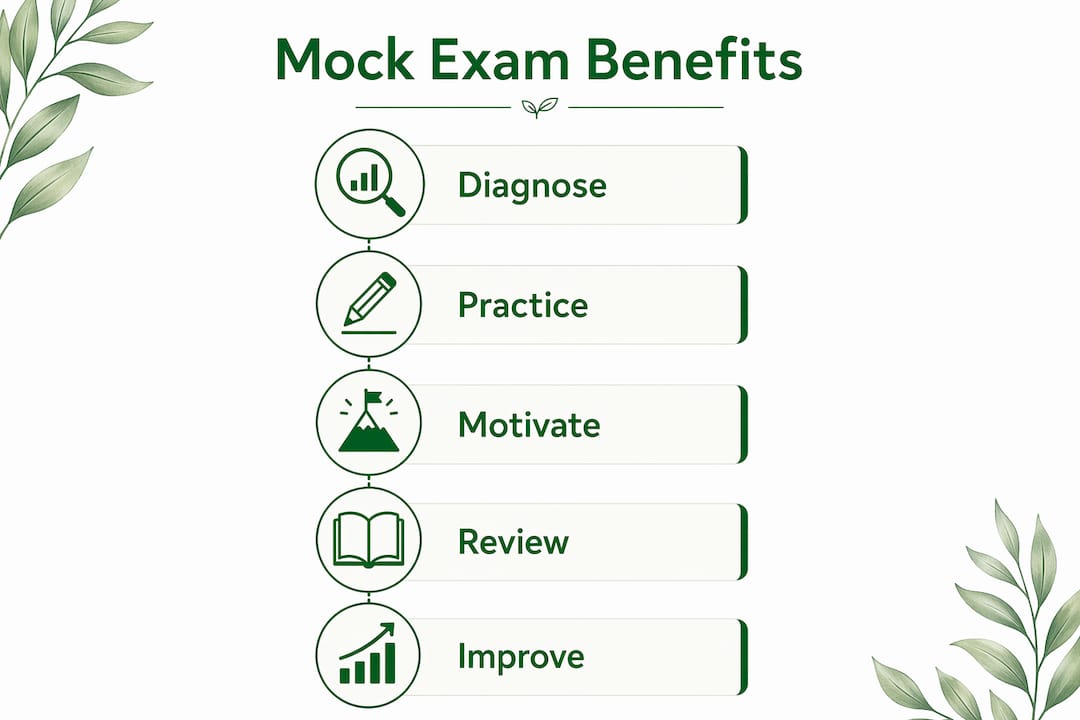
The role of practice exams in student preparation is threefold: they diagnose weaknesses, reinforce memory through retrieval, and train students to perform under timed, pressured conditions. Each of these functions serves a different but equally important purpose in the path to academic success.
Retrieval practice is the main mechanism behind why mock exams improve learning more than passive revision. When a student reads notes, the brain recognizes information. When a student answers exam questions from memory, the brain is forced to reconstruct knowledge. That reconstruction process is what makes the memory stronger and more durable. This is the “testing effect,” supported by decades of cognitive psychology research and increasingly applied in classrooms in 2026.

The diagnostic function is equally powerful. A mock exam reveals not just what a student does not know, but how they are failing. Are they running out of time? Misreading questions? Losing marks on structure? These are technique problems, not knowledge problems, and they require different solutions. Identifying them early gives students and parents something concrete to act on.
Mock exams also serve a motivational function. Completing a full paper under exam conditions and reviewing the result gives students a clear sense of progress. That clarity is far more motivating than vague revision sessions with no measurable output.
How do mock exams improve learning and memory retention?
The testing effect is the finding that being tested on material improves long-term retention more than spending the same time re-reading or highlighting. The reason is retrieval practice. Every time a student pulls information from memory under exam conditions, the neural pathway for that information is strengthened. Passive revision, by contrast, creates an illusion of familiarity without building the retrieval strength needed in an actual exam.
This is why tools like Quizlet, which is built entirely on active recall and spaced repetition, have become standard revision aids in secondary schools. Babbel uses the same principle for language learning. Both platforms work because they force the learner to produce answers, not just recognize them. Mock exams apply this principle at scale, across an entire subject, in the format the student will actually face.
The benefits of mock exams for memory are not uniform across all learners. Research published in npj Science of Learning confirms that the testing effect varies by learner group, with neurodiverse students sometimes requiring adapted formats or additional scaffolding to benefit fully. Parents of students with dyslexia, ADHD, or anxiety should be aware that standard mock conditions may need adjustment to be genuinely diagnostic rather than simply stressful.
Key reasons retrieval practice outperforms passive study:
-
Re-reading notes creates recognition, not recall. Exams test recall.
-
Active recall forces the brain to reconstruct knowledge, which strengthens memory pathways.
-
Spaced retrieval practice across multiple mocks compounds retention over time.
-
Identifying retrieval failures during a mock is more useful than discovering them in the real exam.
Pro Tip: After each mock, write down every question you could not answer confidently before checking the mark scheme. This list becomes your targeted revision plan for the next study session.
When should students take mock exams for the best results?
Timing is the most misunderstood aspect of mock exam strategy. Full-length mocks should begin only after a student has covered roughly 70 to 80 per cent of the syllabus. Starting earlier produces low scores that reflect incomplete coverage rather than genuine weaknesses, which misleads revision focus and damages confidence before it has been built.
The recommended schedule for most secondary and junior college students follows a clear progression:
-
First mock: Complete after covering most of the syllabus. Use it purely as a diagnostic tool. Do not treat the score as a prediction. Treat it as a map of gaps.
-
Targeted revision: Study the specific topics and skills the first mock exposed. Do not restart general revision. Work on the gaps only.
-
Second mock: Sit this 7 to 10 days before the exam. It should confirm that targeted revision has worked and reveal any remaining weak areas.
-
Final review: A third mock 2 to 3 days before the exam is optional. If used, it should be treated as a confidence check, not a new diagnostic exercise.
-
Day before: Light review of 30 to 60 minutes, equipment preparation, a proper meal, and 8 to 9 hours of sleep. This is not the time for new content.
The most common mistake students make is taking multiple mocks in a row without reviewing results between them. Testing without review is not a learning strategy. It is practising mistakes repeatedly until they feel natural. Each mock must feed a review cycle before the next one begins.
Pro Tip: Treat your mock result as a receipt, not a report card. It tells you what you spent your revision time on and what you missed. Adjust the next session accordingly.
How do mocks build exam technique, time management, and confidence?
Beyond content knowledge, mock exams train students in the practical skills that determine exam performance. Mocks aligned with real test formats reduce the “fear of the unknown” by making the exam environment familiar before it matters. Students who have sat three timed papers in silence walk into the real exam knowing exactly what the next three hours will feel like. That familiarity alone reduces anxiety significantly.
Time management is a skill that cannot be learned from a textbook. Students discover their pacing problems only when they run out of time mid-paper. Mocks reveal whether a student spends too long on early questions, skips difficult ones and forgets to return, or writes answers that are too long for the marks available. These are fixable habits, but only if they are identified first.
Mock exams also develop higher-order thinking skills. Modern exams at GCSE, A Level, and Singapore’s O and A Level standard increasingly reward students who can apply concepts to unfamiliar contexts, not just recall definitions. Practising with past papers and mock questions builds the mental flexibility to approach new question types without freezing.
There is also a practical consequence that parents in Singapore and the UK should note. Mock results inform predicted grades that universities and polytechnics use when making conditional offers. A strong mock performance in Secondary 4 or Year 12 can directly influence the offers a student receives, making mock preparation a high-stakes activity in its own right.
Key exam technique benefits from regular mock practice:
-
Pacing: students learn how long to spend per mark and per question type.
-
Question interpretation: repeated exposure to exam language reduces misreading.
-
Answer structure: students develop habits for organizing responses clearly and efficiently.
-
Mental stamina: sitting a full paper builds the concentration needed for the real exam.
-
Stress tolerance: repeated exposure to exam conditions reduces anxiety over time.
How to use mock results to improve your next exam performance
Mock results must be interpreted as diagnostic data, not as fixed outcomes. A score of 55 per cent tells you very little. The question breakdown tells you everything. Which topics lost the most marks? Were the errors conceptual, or were they careless mistakes under time pressure? Did the student lose marks on structure and presentation rather than knowledge?
The most effective approach is to build an error log. For each mock, record every question answered incorrectly or partially, the topic it tested, the type of error made, and the specific revision task needed to address it. Converting mistakes into targeted revision tasks and then re-testing on those exact areas is what separates students who improve between mocks from those who plateau.
Parents play a genuinely useful role in this process. Reviewing the error log together, asking questions about what the student found difficult, and helping to schedule revision sessions around identified gaps is practical support that does not require subject expertise. Parents can also access official sample tests and practice platforms to better understand the format their child is preparing for.
Communication with teachers matters too. Teachers can clarify marking criteria, explain where marks were lost, and confirm predicted grades based on mock performance. Students who ask for this feedback and act on it consistently outperform those who treat the mock as a private exercise.
Pro Tip: Do not wait for a teacher to return a marked mock before reviewing it. Attempt a self-mark using the official mark scheme first. The act of marking your own work is itself a powerful learning exercise.
Key takeaways
Mock exams improve academic performance only when each attempt is followed by a disciplined review cycle that converts errors into targeted revision and re-testing.
| Point | Details |
|---|---|
| Start mocks at the right time | Begin full mocks only after covering 70 to 80 per cent of the syllabus to get genuine diagnostic value. |
| Review before repeating | Each mock must feed a targeted revision cycle before the next mock is attempted. |
| Retrieval beats passive revision | Active recall through mock exams strengthens memory more durably than re-reading notes. |
| Mocks build exam technique | Timed practice under realistic conditions develops pacing, question interpretation, and mental stamina. |
| Results inform real decisions | Mock grades influence predicted grades used in university and polytechnic applications. |
Why most students are using mocks wrong
Most students I work with treat mock exams as a measuring tool rather than a learning tool. They sit the paper, check the score, feel relieved or disappointed, and move on. The score becomes the event. The review becomes an afterthought.
That is the wrong order entirely. The score is almost irrelevant at the mock stage. What matters is the pattern of errors. A student who scores 62 per cent and builds a precise error log will almost always outperform a student who scores 74 per cent and files the paper away. The lower-scoring student has more information and is using it.
I have also seen the opposite problem: students who sit mock after mock in the weeks before an exam, convinced that volume equals preparation. Without review between each attempt, they are rehearsing their mistakes. The testing effect only works when errors are identified and corrected. Repetition without correction is not practice. It is reinforcement of the wrong habits.
The students who use mocks most effectively treat each one as a conversation with the exam. They ask: what did this paper tell me that I did not already know about my own preparation? That question, asked honestly after every mock, is worth more than any revision timetable.
— Pincheng
How Willow Learning Centre supports mock exam preparation
Willow Learning Centre works with Primary, Secondary, and Junior College students across Singapore to build mock exam preparation that is specific to each student’s gaps and goals. Small group tuition classes mean tutors can identify exactly where a student is losing marks and build a revision plan around those weaknesses, not a generic syllabus overview. Whether a student needs help with Chemistry structured questions, English comprehension technique, or Mathematics problem-solving under time pressure, Willow Learning Centre’s tutors have a proven track record of turning mock results into real grade improvements. If your child’s mock results are not yet where they need to be, find out how personalized tuition at Willow Learning Centre can make the difference before the real exam.
FAQ
What is the main purpose of a mock exam?
A mock exam simulates real exam conditions to help students identify knowledge gaps, practise exam technique, and build confidence before the actual assessment. It functions as both a diagnostic tool and a learning exercise through retrieval practice.
How many mock exams should a student do before the real exam?
Two to three mocks spaced across the revision period is sufficient for most students, provided each mock is followed by a targeted review cycle. Taking more mocks without reviewing results between them is ineffective and can reduce confidence.
When is the best time to start mock exams?
Students should begin full-length mock tests after completing roughly 70 to 80 per cent of the syllabus. Starting earlier produces scores that reflect incomplete coverage rather than genuine weaknesses, which can mislead revision priorities.
How can parents help with mock exam preparation?
Parents can review error logs with their child, help schedule targeted revision sessions, communicate with teachers about predicted grades, and use official practice platforms to understand the exam format their child is preparing for.
Do mock exams reduce exam anxiety?
Yes. Practising under timed, realistic conditions reduces anxiety by making the exam environment familiar before it counts. Students who have completed multiple mocks report lower stress on exam day because the experience is no longer unfamiliar.